
Mind-Body Practice / Movement 1 / Jogging

INTRO TALK

Jogging is another movement we have learned to take for granted. It’s good exercise, of course, but it’s also ripe for deeper inquiry.

In the progression of our practice, there are some reasons for starting with jogging rather than walking. At this point we are still increasing the intensity of our work while simultaneously relaxing ourselves. So … let’s jog.

In general, we are using the jogging as feedback for posture and internal tension. We are also using it as a mechanism for relaxing the body further and making sure the whole body is working and ready for more standing movement.

With each step, the impact travels through the bones and tissues of the body like a wave. When it hits tension the wave doesn’t travel through as well or stops completely. If you pay attention you can diagnose and even massage out various tensions just through jogging.


STEP BY STEP

1. Check your standing posture: bend the knees a little and relax the hips and shoulders. Pick your whole foot up as if it were being lifted by a string attached to the knee, and then put it down again as if the string were lowered. Do the same with the other leg … back forth a few times until you get the feel of jogging in place like this, making sure the knees have some bend in them, the hips stay relaxed, back is mobile, and the arms hang freely. Finally take a little jog like this to get the feel of it.

2. Start jogging with the follow breath pattern. Inhale one step, exhale one step. Inhale two steps, exhale two steps. Inhale three steps, exhale three steps. And so on. Go as high as you can, keeping in mind you’ll have to go back down. Let’s say you get to inhale 15 steps and exhale 15 steps. Then go back down, with inhale 14 steps, exhale 14 steps. Inhale 13 steps, exhale 13 steps. All the way back down to inhale 1 step, exhale 1 step.

3. Jog freely in different direction — forward, backward, sideways, and so on. Try long steps, short steps, different gaits, and so on. Look inward and see how the impact of each step travels through the body. Where does the energy go? Where does it stop? Where does it accumulate? Try to jog in such a way that energy passes freely through the body and does not accumulate in any particular area.

NOTES

a. With jogging, as with other exercises, so many breath patterns can be explored. Try triangle type breathing where you inhale, hold, exhale for your steps, or box breathing where you inhale, hold, exhale, hold for your steps. And this is only the beginning. Breathing itself is a much deeper topic than a few patterns.

b. Too much tension in the joints prevent them from functioning properly to absorb and transmit impact. Examine the tension patterns inside your body while you jog. Are impacts predominantly hitting one area or joint, or are they distributed throughout the body?

c. Jogging has ancient roots. Our ancestors jogged for hunting, survival, travel, and surely pure joy. Jogging can be good check on the status of your mind. Go for a run and watch your thoughts. See what kind of thoughts intrude. After a mile or two, you will have a good picture of your mental blocks and habits.


GOING DEEPER

Once we begin to see how the impacts created by jogging travel through the body as waves, where they go and why, we can begin to manipulate the waves through changes in body structure, tension, and density.

Work on changing the course of the impact wave by experimenting with slight changes in posture, gait, and breathing. See if you can direct it into various areas and body parts. And see also that the source of the walking can come from different areas as well.

Now, just by jogging, we can work from and massage various parts of the body: the feet, calves, knees, thighs, hips, lower back, upper back, neck, and so on. Jogging then becomes a way of diagnosing various dis functions and of healing them.


ROUTINES

Every day for 1 week, spend 5 to 20 minutes jogging. Work different breath patterns, and use the jogging to relax yourself and massage different body parts.

OBJECTIVES

Learn to jog in a efficient way that keep you healthy and expands breath capacity. Use jogging to remove stress, re-pattern conditioned tension, and even heal injuries.


COURSE SYLLABUS

preview | introduction | 1 ground checks | 2 turnovers | 3 crawling | 4 push-ups | 5 rolls | 6 sit-ups | 7 transitions | 8 squats | 9 jogging | 10 free move | 11 walking | 12 recovery | comprehensive practice

Mind-Body Practice / Movement 1 / Squats

INTRO TALK

The squat is another classic movement that many people treat as a prescribed exercise only. However, nothing could be more natural than a squat. Babies do it at about twenty months, and for most people all over the world they continue to squat on a regular basis — to do work, to wait, to rest one’s legs, to relieve oneself, and so on.

If you want to move freely squatting is a fundamental position, and if you want to build functional capacity in the legs, squats are of course great exercise too.

In our progression, we will treat the squat similarly to how we treated push-ups and sit-ups. It’s important to examine how tensions in the body allows or inhibits squatting, how tension builds throughout movement, and how to coordinate breathing.

We will also look at the importance of pushing oneself beyond initial thresholds for fatigue, unpleasantness, and mental resistance. This is a lesson that can be applied to all our work, and especially push-ups, sit-ups, and squats.


STEP BY STEP

1. From standing, on the inhale squat down, all the way if you can or as low as you’re able. Note how the tension builds and at about half-way down, exhale, releasing as much tension as you can as you continue the rest of the way down. Then go up the same way, inhale and start going up. Note the tension building and at about half way, exhale as much tension as you can as you push the rest of the way up. Then do a few squats where you inhale all the way down and exhale all the way up, and vice versa, checking and minimizing tension levels as you work.

2. Do a single squat as slowly as you can, breathing continuously in the nose and out the mouth. Move at a constant rate. Don’t speed up. Watch as the tension, pressure, pain, and discomfort builds. Breath into it and release, but continue your slow pace all the way down and all the way back up. If your legs start to shake, let them shake, let your whole body shake, but continue your slow pace through the whole squat.

3. Try some freestyle variations. With each squat, change your feet positions — wide narrow, lunge forward, lunge back, different angles, all the way up onto tip-toes, with a jump, and so on. Breath freely with the movement, as needed, making sure you’re not holding your breath.

NOTES

a. Try to keep your back straight and shoulders relaxed. For a straight squat keep you feet pointed forward and heels on the ground. If you can’t go into a full squat, go as far as you’re able.

b. The slow squat exercise can be done on a count if needed — say a ten count down and ten count up, then twenty count, and then even a forty count down and up. If you haven’t had doubts about what you’re doing in the middle, you haven’t gone slow enough. The same can be done with push-ups, sit-ups, and leg lifts. This is great work that pushes you mentally and physically.

c. Remember that at the end of the day squatting down is just squatting down and standing up is just standing up. We can work on fine tuning details and that’s good, but don’t trade natural movement for one specific technique.


GOING DEEPER

If we just go through the motions of an exercise, without actually pushing the boundaries of our comfort, our progress and opportunities for insight will be small. On the other hand, if we push at the boundaries of our selves, of our fears, our self judgement, our pain, an so on, our progress and opportunities for insight will expand proportionally.

We should, of course, look after our health in a responsible way. We are not trying to injure ourselves. The work should be done in a way that heals and strengthens the body. But nevertheless, we have to work and we have to push ourselves.

On the level of exercise this means pushing past our initial discomfort, fatigue, and psychological resistance. Only then does the real transformative work begin, because we are taken out of our conditioned responses and forced to find new ways to continue, activating dysfunctional areas and finding hidden reserves of strength.

On the spiritual level, we push at the boundaries of ourselves. We work to challenge our conception of who and what we are. Only then can we discover that we are not our thoughts, we are not our fears, we are not our judgments, we are not our pain. And beyond all of that, we may discover what we really are.


ROUTINES

Every day for 1 week, warm up with various movements, and then spend some time working on squats. Do at least one slow squat and 1 minute of continuous free-form squats. For deeper practice double the time to 2 or 4 minutes squats.

OBJECTIVES

Increase freedom of movement and overall health and functional strength in the legs by challenging yourself with a variety squats.


COURSE SYLLABUS

preview | introduction | 1 ground checks | 2 turnovers | 3 crawling | 4 push-ups | 5 rolls | 6 sit-ups | 7 transitions | 8 squats | 9 jogging | 10 free move | 11 walking | 12 recovery | comprehensive practice

Mind-Body Practice / Movement 1 / Transitions

INTRO TALK

Until now we have been working on ground movement up to the point of doing rolls and sitting upright. Now we will begin to work on transitions from lying down to standing up and back down again.

The ability to get down on the ground and get back up can be a good indicator of overall mobility and potential life-span. It is fundamental movement that promotes health and well-being, reduces fears and stress, and increases one’s sense of freedom.

I often recommend transitions as a daily practice for people of all ages. It can be done with assistance if needed, and as slowly as necessary. But consistent practice can promote health and mobility throughout our lives. With proper attention, it also offers deep insights into the nature of self.

In the progression of our practice, transitioning to standing opens up a whole new realm of training. Transitioning up and down completes the evolutionary cycle of fundamental postures. And the possibilities for movement within are limitless.


STEP BY STEP

1. Stand up and go back to the ground in as many different ways as you can, using assistance if needed. Breath continuously and go slow. Check yourself at various stages and actively minimize, release or redistribute any tensions or fears that arise.

2. Next start to focus on breathing. Inhale and start going down. About halfway down or when the tension peaks, exhale and continue the rest of the way down. Then inhale and start going up. About halfway up or when the tension peaks, exhale and continue the rest of the way up.

3. Exhale and go all the way down. Inhale and go all the way up. Then reverse — inhale down and exhale up. If this is too much, go back to exercise 2. If it’s easy, try down and up on the inhale and down and up on the exhale. and so on.

4. If you’re having trouble with coordinating breath and movement, watch and follow the natural rhythm of your breathing. Move toward up when you are inhaling and move down when you are exhaling. Once the breath feels primary, you can start to stretch out the breathing a little while keeping in your awareness.

NOTES

a. Monitor physical and psychological tension throughout the movement. Check yourself when fully lying down that you have fully relaxed before going back up.

b. Lead with the breath by starting inhale or exhale just prior to movement. Try to time the cycle to complete as the movement completes.

c. Press at trying more difficult breath patterns and go back to easier ones, aiming to find a place where breath and movement work together to create comfortable transitions that can be sustained indefinitely.


GOING DEEPER

This practice to very deep when you begin to look at coordination of mind, breath, body, and movement. And when you begin to ask questions like: How is the body controlled? Who is controlling it? What is the difference between mind, breath, body, and movement?

There’s not time in this Level 1 course to detail progressions on how to use transitions as a form of self inquiry. But start by asking these questions, and by trying to observe and manipulate the coordination of the mind-body elements.

Finally, as you go up and down, quiet the mind, slowly withdrawing the ego and volition. Allow all the elements — mind, breath, body and movement — to find their own self-coordinated and synchronized rhythm.

Allow everything to happen on its own and you may experience total unification — mind and body, inside and outside, movement and stillness. Ultimately, there are no differences, whatsoever.


ROUTINES

Every day for 1 week, warm up on the ground with various movements, and then spend 5 minutes working on transitions. For more practice work for 10 or even 20 minutes on your transitions.

OBJECTIVES

Increase freedom of movement and overall health by developing a wide variety of adaptive, smooth, relaxed transitions between lying down and standing up.


COURSE SYLLABUS

preview | introduction | 1 ground checks | 2 turnovers | 3 crawling | 4 push-ups | 5 rolls | 6 sit-ups | 7 transitions | 8 squats | 9 jogging | 10 free move | 11 walking | 12 recovery | comprehensive practice
Mind-Body Practice / Movement 1 / Sit-ups

INTRO TALK

Sit-ups are a classic exercise, but again, forget your idea of sit-ups. We’re not here to crunch out six-pack abs, either in terms this course or in the larger sense of our lives and this world.

Because the task is somewhat simple, now is a great opportunity to put everything we’ve learned so far together and go deeper into it. The first step is reminding yourself of what we’ve covered in previous lessons and applying it to sit-ups.

Sitting up is not an exercise! It is not an artificial movement rooted in an idea. It is completely natural and is just something human bodies do when they’re able. Learn to sit up with relaxation, smoothness, and comfort. Sit up while breathing, and with a calm mind.


STEP BY STEP

1. Lay on your back with legs relaxed and sit up using no arms and minimal tension. Try from different positions on the ground and to both sitting on your butt and sitting on the knees, if you can do it.

2. Experiment with legs and arms in space as counterbalances and to help assist sitting up.

3. Maintain continuous movement, from lying down to sitting and back to lying down.

NOTES

a. Remember the progression from previous exercises. Check yourself in and between movements. Breath into tension and release any excess.

b. Take care not to grind your spine against the hard ground when you go down. Be mindful how you position your body, so softer areas can make contact first and ease your transition to lying down.

c. Study and develop different seated postures to expand the range of seated positions.


GOING DEEPER

Although sitting up is completely natural, it profoundly changes our relationship to the ground. It changes our spinal axis from horizontal to vertical, fundamentally changing our orientation to space, gravity, the earth below and the heavens above.

Various kinds of sitting meditation are a backbone of spiritual traditions around the world. When considering the fundamental postures of lying down, sitting and standing, sitting is a kind of middle point — a position in which our top half is upright, while our bottom half is still firmly on the ground.

Sitting encourages a balance between relaxation and attention, between restfulness and activity. In this orientation, we are invited into deeper inquiry and an expanded dimension of our practice.

So for 10-45 minutes a day just sit in a meditative posture — cross-legged or in a chair, back straight, eyes soft, breathing through the nose. No need to do anything special — just sit there and see what happens when you do this consistently.


ROUTINES

Every day for 1 week, warm up with some ground checks, turnovers, crawling, push-ups, and rolls; then spend 1, 2, or 4 minutes doing a variety of continuous sit-ups.

OBJECTIVES

Make sitting up smooth and intuitive from any laying down position to any sitting up position.


COURSE SYLLABUS

preview | introduction | 1 ground checks | 2 turnovers | 3 crawling | 4 push-ups | 5 rolls | 6 sit-ups | 7 transitions | 8 squats | 9 jogging | 10 free move | 11 walking | 12 recovery | comprehensive practice
Mind-Body Practice / Movement 1 / Rolls

INTRO TALK

As children you may have done log rolls or somersaults down a hill, or spun around with joy. There’s something freeing and fun about rolling that we can recapture in practice.

Rolling around on the ground is a primal, healthy instinct that begins with some of our earliest movement. To some extent, we continue this movement regularly when we roll over in our sleep or roll out of bed in the morning. So let’s bring this movement into our intentional practice.

Rolls can be a slightly more technical and challenging than the previous exercises, depending on each person’s body condition, internal tensions, flexibility, and so on. But if you’ve gotten this far, you will be able to do some kind of roll and improve over time.

It’s important to start slowly so the body understands the movements before throwing yourself into more dynamic rolls. All the work we’ve done so far will help. You may be putting yourself into new positions, so make sure you relax yourself. Don’t allow tension to build up. Keep a calm mind and relaxed body as you roll around.


STEP BY STEP

1. Log Roll: Lay on your back, put your arms and legs in the air and move them around slowly to explore how subtle changes in limb position affects movement. With the arms and legs in the air, roll onto side, stomach, side, and back.

2. Back Roll: Do a leg lift, and if you can extend the legs all the way behind your head. From here, turn your head to side and roll over your shoulder, either to your knees or stretching your legs out so you go onto your stomach.

3. Forward Roll: If you were able to complete a back roll, you can literally reverse the movement to understand a basic forward roll. Otherwise, from your knees, reach out with arm, twisting it forward until your palm is flat on the ground and get the back of the same shoulder on the ground. From there, slowly roll over to the opposite shoulder and down the side of the back.

4. Challenge: Combine three types of rolls into one movement.

NOTES

a. Use very slow rolling to explore balance, control, and relaxation if various positions. See if you can stop and reverse the roll at any point.

b. If your feel you’re stuck and that in order to continue you will have throw yourself forward, some kind of tension is stopping you, often in the lower back. It could be structural and something you have to work with/on. Or it could just be fear — the body doesn’t understand the position and reacts by tensing up. Try breath into the tension, then release and relax as much your can on exhale. See if that allows you to continue the roll.

c. There are more roll variations but practicing these three provide a solid foundation for further exploration.

d. I’ve done my best with the written instructions, and they will serve well as a reminder, but seeing the teaching segment video is really necessary here.


GOING DEEPER

If you ever feel discouraged your practice, that is a good opportunity to examine yourself — your expectations, your hopes, your fears. It all goes very deep into the ideas we have about ourselves and our life.

Why are you doing this practice? What do you expect will happen? What do you expect to get out of it? Why have you sought out this training? In even attempting this, what are you trying to tell yourself. The truth is: we don’t know. We have to persevere in practice to find out.

At times we may get excited about sudden insights and where they might lead. At time we may feel we’re your hopeless and dejected. Whatever happens, don’t get too caught up in emotions. Just see them for what they are and continue to practice with patience and resolve.


ROUTINES

Every day for 1 week, warm up with some ground checks, turnovers, crawling, and push-ups; then spend 5 minutes working on your rolls and rolling around on the ground. If you want more, do 10 minutes, or even 20 minutes of continuous rolls.

OBJECTIVES

Roll comfortably and smoothly on a variety of surfaces while increasing relaxation, range of motion, and coordination of movement.


COURSE SYLLABUS

preview | introduction | 1 ground checks | 2 turnovers | 3 crawling | 4 push-ups | 5 rolls | 6 sit-ups | 7 transitions | 8 squats | 9 jogging | 10 free move | 11 walking | 12 recovery | comprehensive practice
Mind-Body Practice / Movement 1 / Push-ups

INTRO TALK

In addition to being a good exercise, so much can be learned from the simple push-up and its endless variations. But forget about maybe 90% of what think of when you think of push-ups. Try to approach this with a real beginner’s mind. The practice here is quite different from what you may be used to.

As with all the exercises, what’s presented here is just what I’m calling Level 1, meaning it’s a place to get you started. Deeper insight takes time and experience. But whatever we are doing in life, we can only experience what we’re experiencing right now, and we can only see what we can see right now. If we engage fully with this moment, then in the next moment we may see something entirely different.

This approach to push-ups is not as an exercise to build upper-body muscular strength. It will do that to some degree, but in end that’s very limited and there are many more aspects of doing push-ups that are much more interesting and beneficial.

When doing these push-ups, we are developing relaxed strength, whole-body strength, spiritual strength. Some hallmarks of this method are coordinating breath and movement and using only enough tension to accomplish the task. In this way, we are still looking to maximize relaxation in the movement. We’re just making the movement a little bit harder. :)


STEP BY STEP

1. Get into a push-up position. If you need to, go from your knees, making sure to relax the lower part of the legs. As you inhale, start to go down. Note how the tension builds and at about half-way, exhale, releasing as much tension as you can as you continue the rest of the way down. Then go up the same way, inhale and start pushing up. Note the tension building and at about half way, exhale as much tension as you can as you push the rest of the way up.

2. Next, do a few push-ups where on the inhale you go all the way down and on the exhale you push all the way up. And try the reverse, exhaling down and inhaling up. Try not to let tension build up in the movement. Check yourself to see that you aren’t tensing your muscles more than you need to keep form and go up and down.

3. Now, try some freestyle variations. With each push-up, change your hand and feet/knee positions. Breath freely with the movement, as needed, making sure you are never holding your breath

NOTES

a. Don’t be worried about how many push-ups you can do, especially at the beginning. If you focus on numbers, you will not pay attention to body alignment, breathing, and tension. You will end up sacrificing quality practice for achieving a number.

b. Treat the push-ups as part posture exercise — making sure head, neck, back, and hips are in alignment — and in part relaxation under pressure exercise.

c. Make breathing primary by engaging breath before movement, by focusing attention on the breath rather than muscles, and by inhaling into tension and exhaling excess tension.

d. Don’t do so many push-ups that you over-strain yourself. And don’t do so few that you aren’t challenging yourself. The push-ups are designed to put pressure on the body and psyche. You have to work.


GOING DEEPER

Pay attention to how your mind responds to doing push-ups. Do you resist working hard? Do you have negative thoughts? These are just more forms of tension. Inhale into them and release the thoughts as you exhale.

Usually the inhibiting factor is not the capacity of the body to do more push-ups. We are limited more by a buildup of resistance in the mind. Clear the mind of all negativity, and see how much easier the push-ups become.

If you’re having a particularly difficult time, you can work on taming the mind by repeating an internal prayer or mantra. If you don’t know what to say, try the words “Lord have mercy.” It’s pretty neutral and captures the feeling of surrendering your self and the situation to a higher power.


ROUTINES

Every day for 1 week, warm up with some ground checks, turnovers, and crawling; then spend 1 minute on the ground doing push-ups. For deeper practice double the times to 2 or even 4 minutes of steady-paced push-ups.

OBJECTIVES

Maintain calm, clear mind and relaxed body, while under the pressures created by doing push-ups.


COURSE SYLLABUS

preview | introduction | 1 ground checks | 2 turnovers | 3 crawling | 4 push-ups | 5 rolls | 6 sit-ups | 7 transitions | 8 squats | 9 jogging | 10 free move | 11 walking | 12 recovery | comprehensive practice

A Mystical View of Current Events

A friend asked me how I was feeling about current events. He asked what a mystic sees in all this, and how I walk within this “painful human dynamic.” It’s a good question, and a difficult one to answer with words, because it calls for an account of the absolute while bearing in mind a relative world focused on present change. Here’s what I wrote:

It’s heartbreaking when I see people gripped by fear, aggression, despair, and suffering. It’s uplifting when I see them embrace courage, hope, friendship, and selflessness in the midst of uncertainty. But from a spiritual perspective, what’s going on and the stakes involved are no different now than they have always been. Delusion and ignorance are the source of suffering. When there is great delusion, there is great suffering. That’s nothing new. It’s been going on for a long time.

The mystical view is one of absolute unity, without any division or separation whatsoever. There is nothing but that unity, that limitless One. All phenomena, including one’s own body, one’s mind, one’s thoughts, the world, others, all things and events, all of time and space, appear — dream-like — within that. Behind it and through it always and everywhere is this limitless reality of being. So while great change may erupt around us — whatever it is — it is not other than divine.

I read a piece by Buddhist teacher Alex Kakuyo recently that said “The world is both a land of suffering and a wish-fulfilling jewel.” And that’s a good way of putting it. The relative and the absolute are not separate. So although delusion is the source of suffering, it is this very suffering that turns us toward the truth, puts us on the path, and leads us to that which is beyond all things.

For any individual at any given time, this turning toward the truth may happen in a very small way, like a whisper one barely hears, tries to ignore, or even actively pushes away. But once truly heard, the sacred fire is lit. And this thirst for truth, when followed, leads all to a heaven that is both this very world and beyond it.

Nothing bad happens when we regard all beings with compassion and see their actions in this light. So I pray for all people to hear that whisper, that call to the truth. I pray that whatever suffering they endure shows them the next step on their spiritual journey, and that they may keep walking, all the way to the end, to realize the great love and the great perfection that is always with us.

Reflection on the Nature of Aikido

I have been practicing Aikido, in one way or another, for 30 years. For all those years, I had one fundamental question about Aikido: What is it? Of course, it’s a martial art, but it’s concerned with much more than fighting, so there’s a lot of mystery and confusion about what exactly it is and why or how to practice. I had many excellent teachers, but I never asked them this question. Somehow I knew that no answer would satisfy me, that I would have to find out for myself. Like many, I went through periods when I had some insights and held this idea or that idea about what Aikido was and how to develop it. And I followed those ideas wherever they led, even when they lead outside the realm of what was being taught in the Aikido dojo, including practicing Systema for fifteen years.

In 2016, I had a sudden, unexpected, and profound spiritual awakening that instantly transformed my perception of reality. I wrote a whole book about that — but let’s just say it was the culmination not just of my training, but of the entire path and circumstances of my life. The clarity that blossoms in the aftermath of such an awakening is beyond imagination. So if I ask myself “What is Aikido?” now, I can answer without reservation. Please take my answer for what it is — a sign post, pointing in the direction I have gone. There is no substitution for practice and experience, and nothing is really realized unless it is realized for oneself.

Let me start with this: everything is fundamentally one thing — although it’s not really a thing because there is nothing else. This oneness is always in harmony with itself. There are no real conflicts within it, and there is no outside of it. What’s seen as a conflict at one level, is harmony at a higher level. And since oneness admits no levels at all, both conflicts and levels are illusory. There is just this one great divine harmony, which is reality itself. What is seen as the separate self — the source of all conflict — is nothing but this great divine harmony. And all notions that we are not that, are just more illusory conflicts.

Aikido, as most practitioners know, means harmony-ki-way. This is sometimes interpreted as a way of “harmonizing ki” or “harmonizing with ki.” That’s okay to begin with, but ultimately those ideas will keep you separate and in the realm of illusory conflicts that need harmonizing. Many Aikido practitioners are merely in a struggle to develop subtler and subtler skill or stronger and stronger technique. That’s not bad, but it has no end, and does not in itself lead to great harmony. For as long as you are struggling to harmonize something or with something, you are in fact in the midst of conflict.

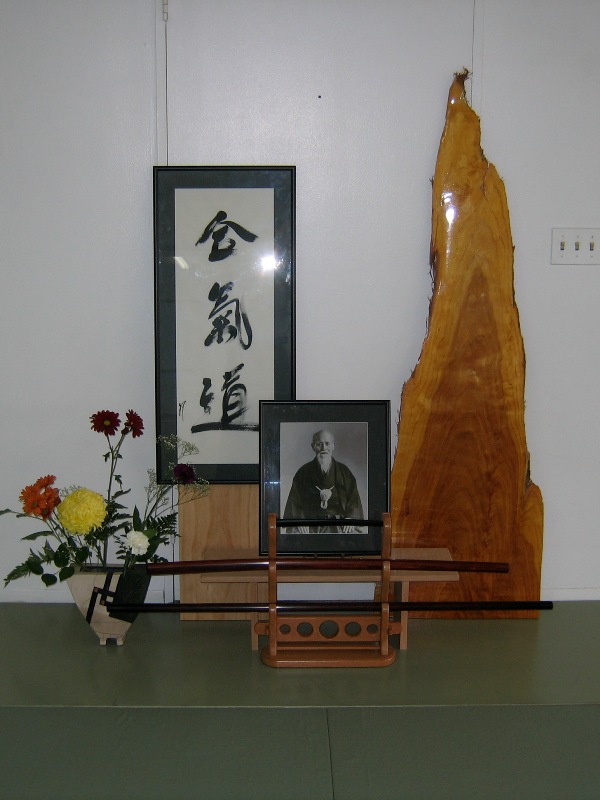
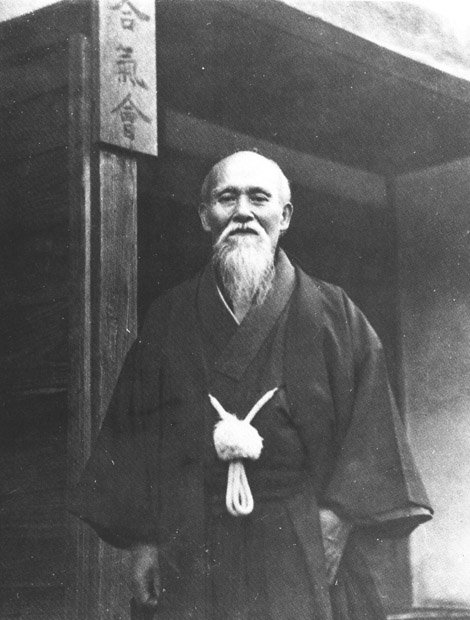
Aikido is a practice for realizing what is already eternally harmonious. Morihei Ueshiba, the founder of Aikido, said “I am the universe!” not “I can harmonize with the universe.” Realizing unity removes all separation and instantly reveals total harmony, regardless of skill or events. So in the end, the technical aspects of Aikido are beside the point when it comes to this great realization. That may seem like a disappointment to those seeking mastery, but it doesn’t mean skill has only practical value or none at all. Aikido is a vehicle for inquiry, insight, and realization. As such, we can enjoy it, learn from it, teach with it, and pass it on to others. In time, they may develop skill as well, but more importantly, they may realize the truth within Aikido.

O-sensei’s words, “I am the universe!” are not a boast, nor a metaphor. It is true for everyone, but few realize it. O-sensei had great skill, of course, but his true gift was that he realized the source of his power was not himself. True power can only be realized by surrendering the separate self and all its illusory sources of power. True power is to always be at peace with what is, regardless of circumstances. One who has realized that power — even if beaten or killed — cannot be defeated.

So if you look for Aikido in soft, subtle technique, you will not find it. If you look for Aikido in strong martial technique, you will not find it. If you look for Aikido in philosophies and so on, you will not find it. But do not stop looking! There is a oneness and a harmony so profound that the separate mind cannot imagine it. So look everywhere, within and without. Train relentlessly, wherever the path takes you — until at last you realize there was never any conflict to begin with. There, you will find the spirit of great harmony … there you will find an invincible peace.

Prepare for Transformative Change

I hear some talk lately about when things will go back to the way they were … as if they ever do that. On the other hand, I hear some talk about how things will never go back to the way things were … as if that weren’t always the case. I get it: in the current environment, some people are seeing fundamental impermanence more clearly than they have ever seen it before. And the stakes seem higher. But from a spiritual perspective, nothing really has changed in this regard.

All things change continuously. The entire phenomenal universe is a phantasmagoria of change. Nothing ever goes back to the way things were, if they were even that to begin with. Widen your gaze enough, and you will see that mountains rise up and crumble to dust as swiftly as storm clouds blowing overhead. The stars ignite and go out as quickly as match heads. Each moment is always this moment — ever present — and yet things always change. The things cannot be grasped because they are always changing, and the moment cannot be grasped because you cannot be apart from it. So there really is nothing to hold on to.

Usually, we hide this truth from ourselves, principally to stave off terror. We imagine an independent self, and project a past and future, with some sense of stability and permanence. But this is only the imagination at work. That separate self, that stability, that permanence, has always been a kind of illusion. In times of great upheaval, many people may glimpse the real depth of impermanence for the first time. But it has always been thus.

If we are shocked or disturbed by the nature of change, it is simply disillusionment at work. There is fundamentally nothing to fear. Our fears can spur practical action, but we are bound to them only by and precisely to the extent that we cling to our illusions. From the spiritual perspective, disillusionment at work is an opportunity for insight and awakening. Without insight, disillusionment may be experienced as a kind of trauma or an assault against one’s way of life. With insight, it is a catalyst for awakening. So to the degree that our eyes are open to insight — open and accepting — all change can fuel our spiritual growth.

Zen-master Dogen wrote:

“Firewood becomes ash, and it does not become firewood again. Yet, do not suppose that the ash is future and the firewood past. You should understand that firewood abides in the phenomenal expression of firewood, which fully includes past and future and is independent of past and future. Ash abides in the phenomenal expression of ash, which fully includes future and past. Just as firewood does not become firewood again after it is ash, you do not return to birth after death.”

Firewood and ash — birth and death — are only ideas. As are the mountains and stars and your self. Insight into impermanence can encompass everything. This can seem terrifying, overwhelming, as if you are falling into an abyss, which offers no purchase, no hold, and no bottom. But if we can go all in, giving up everything, including ourselves … then our insight may pass beyond the impermanence of all things, and into the absolute, into the divine, into the unchangeable, diamond-like perfection of transcendent wisdom.

From a spiritual perspective, the stakes are no different now than they have always been. And my advice in the current situation is the same advice I would give for any situation. Prepare yourself for transformative change. Seek the truth in yourself and the world. Try to accept the fundamental uncertainty and ever-changing nature of all phenomena. Surrender yourself to the will of God, to the flow of nature and the ungraspable, groundlessness of being. Realize the truth that has always been with you — through every state and every situation — and you will find a love, a joy, and a peace that will endure anything.

Happiness is not a Scarce Commodity

In these trying times, remember that happiness is not a scarce commodity. However, we cannot seek happiness on our own terms or according to our fears and desires. Just allow yourself to be happy, regardless of circumstances, and you will find it in abundance. Even in trying times, joy is present, peace is present, and all-pervasive bliss knows no bounds, no conditions, no beginning, and no end.

Don’t get the idea that I am dismissing the current situation, or dismissing suffering. That would be missing the point. Many are suffering and the current situation may lead to greater suffering. Many people are afraid for their health and for their family. Many are depressed, confused, or fearful about the future. The course of events may lead to the deaths of friends and loved ones … and it may lead to our own death.

I am not dismissing any of that. We should do what we can to mitigate all this suffering. We should take action — or inaction — to keep ourselves and others safe as needed. We should help those around us who are experiencing fear, discomfort, and distress. We should give aid to those who are unwell and comfort those who are grieving. But to base our happiness on the need for such endeavors and the success or failure of them is a mistake.

When we seek happiness on our own terms, we are always seeking gain. We are saying, I will be happy if things go how I want. I will be happy if I get what I desire. I will be happy if my fears don’t come to pass, and so on. That is seeking happiness according to the ego. With that attitude, we are frequently disappointed, troubled, and angered by circumstances. Suffering is magnified, and any personal failure, conflict, or lack becomes a focal point to justify being unhappy.

Instead of seeking any kind of gain, if we root our actions in basic love and kindness, we become open to the whole situation. When we are open like that, we are open not only to suffering and the calamities of events, but to a happiness that does not depend on circumstances — an innate happiness of being. And by being open, we can give ourselves permission to enjoy this happiness. Because it has been there from the beginning and has never wavered, it is always in abundance.

Such happiness is never the product of egoic thinking, nor the result of carefully arranged circumstances. But when we look past all the concerns of the ego, its tangle of fears and desires, we find this innate happiness. Its source is the source of all. And even in such trying times, it is the source of all joy, all peace, all love, and all bliss.