New Look

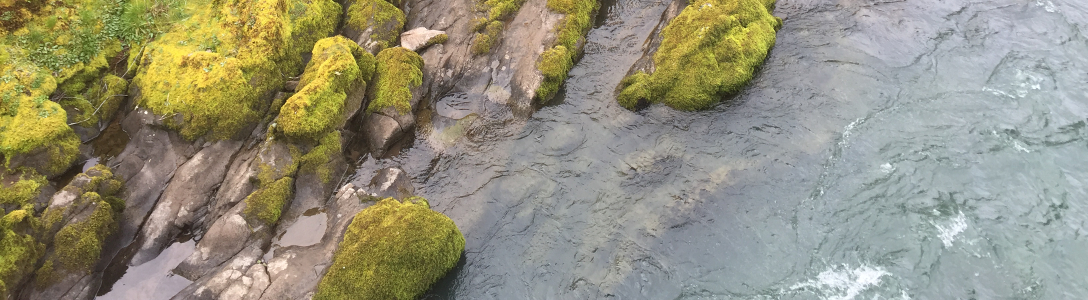
Previous visitors will notice that the website has a new look to it. This layout features prominent page tabs across the top, and two sidebars for better presentation as more content comes online. The header is from a photo I took near Sahalie Falls on the McKenzie River.

Hope you like it. Your feedback is always appreciated (email).

Battle of the Word Processors

What word processor do you use? I’ve used a number of them over the years and have finally realized I’m going to have to write software instead of fiction if I want one that’s just right. I’ve tried a number of programs out there and they all have their pros and cons, starting with MS Word.

MS Word: What’s wrong with Word? Well…to start with it costs a lot of money. I moved away from Word at a certain point because I didn’t see the point if there were viable, free options out there. Additionally, Word did a lot more than I needed it to, so I thought it would be nice to have a more streamlined tool to write with. And I admit there was a sense of adventure in getting away from Microsoft.

Abiword: Abiword is excellent, streamlined, word processor available as a free download. There are no strings attached. It’s a nice little program. It’s small, so it loads and works very quickly. I stopped using it because I found that sadly there were things I couldn’t figure out how to do with it, such as making certain universal formatting changes that I needed to format manuscripts for different markets.

OpenOffice: Open Office seems to have just as many features as Word, and in many ways is a great product. It’s open source, and totally free. However, there were still some things that I wanted to do that were just easier in Word. But the biggest drawback to OpenOffice was it just took too long to load. It was really excessive, at least on my modest laptop.

For a while I was using all three depending on what I needed to do. But I discovered that sometimes I would have problems with a file created in one when I opened it with another. All this was quite frustrating, and as I realized that I kept falling back on Word, I began to long for the good old days when it was all I needed. So I deleted the other programs from my hard drive and now I’m happy to be just using Word again. I still save everything in .rtf format though, unless an editor requests a .doc file.
Art Museum Strategy

Art museums can be a rich source of ideas and inspiration. However, it’s easy to get sensory overload and become drained rather than energized by all the art. Over the years I’ve developed a strategy for getting the most out of my visits to art museums.

The secret is actually not looking at too many images too closely. I take a very quick look through a particular gallery and identify two or three pictures that grab my interest immediately. Then I spend my time deeply exploring, contemplating, and admiring those images only.

To follow this strategy it is essential that you simply ignore the majority of images before you. Too many people think they have to look at everything. Instead, treat your attention as if it were a scarce commodity, then you will be able to go deeper, get more out of the experience, and perhaps even come away with something useful.

(Post prompted by a weekend visit to the Portland Museum’s exhibit on Rembrandt and the Golden Age of Dutch Art.)

Computer or long-hand?

Writers are famous for having wildly different methods of composition. Some write in the morning, some at night, some standing up, and some in bed. Most often I imagine writers go for whatever works for them. I’d like to take a look for a moment at just the physical act of getting the words down.

People often ask me if I write on a computer or long-hand. I say “yes.” The truth is I vary my method quite a bit, at any given time taking the path of least resistance. If I feel constricted at the computer, I’ll break out some loose leaf paper and a pen. Sometimes it’s a disposable rollerball, sometimes it’s a fountain pen. If I’m going out, I’ll take a notebook. At times I’ll write on drawing paper with a pencil as if the whole thing were a graphic exercise. Sometimes I work in a simplified script I invented when pain in my right wrist from too much writing forced me to write with my left hand for a while. I even break out the typewriter occasionally.

For me, often a temporary block will be relieved just by simply changing the method and the medium. The main thing is staying light, relaxed, and mentally fluid so the words can flow naturally. Of course whatever method I use initially, it all goes into a computer eventually.

I’d love to hear from other writers out there on your method of composition, and why you work the way the you do.

Having Faith

Doubt…at some time or another it hits us all. Doubt in our abilities, doubt in the meaning and value of our endeavors. People who work creatively often wrestle with this, and it doesn’t necessarily end with “success.” These negative thoughts can really get you down and lead to a serious loss of productivity.

How should you deal with it? Know that it is only temporary. Think about those times when your confidence soars. And have faith that what your doing is meaningful. Have faith in yourself and your work. Change the subject in the negative conversation you are having with your inner voice. Lead that conversation back to making progress in your creative work. Finally, just get back to doing that work. The clarity of your purpose will return soon enough.

Jay Lake has written a very honest post looking at this issue head-on: Blind faith and the working writer.

“Old Growth” to be published in AlienSkin

My story “Old Growth” is scheduled to be published in the Dec07/Jan08 issue of AlienSkin Magazine. In “Old Growth,” a young botanist finds more than he bargained for when he enters an ancient forest in search of a new species of tree. A horror awaits him the the heart of the old growth.

The story takes place in the Pacific Northwest, but this is one of several horror stories I’ve written that have some link to the fictitious town of Auxerre, Wisconsin. Strange things are afoot there.

AlienSkin Magazine just marked their 6th year of publication in August.

Lost: Everything happens for a reason

Hearing a few friends discussing the latest Lost episode I made the joke that it sounded like it was the audience who was lost. However, I had to admit that it sounded like the kind of crazy story I would totally fall in love with. One of those friends recently lent me the 1st season on DVD and having totally fallen in love with the series I wanted to make a few observations.

My initial joke was in a sense not far from the truth. Lost employs a somewhat unique plot structure in which we know almost nothing about what is actually happening. The show presents a series of strange events and synchronicities. Everything becomes more and more interconnected, and because of this everything that happens begins to seem meaningful. It’s a wonderful effect that generates great discussion.

The characters in Lost are experiencing the same mystery and lack of concrete information as we are, which leads Locke to conclude that “everything happens for a reason,” evoking a sense of destiny and meaningfulness to their predicament. This is in sharp contrast to the seemingly arbitrary demise of various characters. The schoolteacher being blown up by dynamite is a great dramatic example, and of course all the people who didn’t survive the crash. And it is this that drives the counterpoint in which Jack declares that he doesn’t believe in destiny.

Because we do not fully comprehend the events themselves, the show becomes about how the characters deal with the mystery. It asks the question, how do we deal with mystery in life? Few people claim to fully understand the meaning of life, but there are hints everywhere that there is some greater meaning, some great mystery. I think this is why it is so easy to relate to the characters in Lost, even though they are in an extraordinary circumstance. In a way, we are all in an extraordinary circumstance, and there is mystery all around us.

I’ve found it an intriguing idea to think that in some metaphorical way I am on that island, that I am lost. Think about it. How would you respond? What type of character would you be? What stories would your flashbacks tell?

Writing _Heir to Elara_

Short Story production will be slowing for a while as I focus my energy on writing Heir to Elara, the first book in an epic fantasy series. I’ve passed the 30,000 word mark and the work is going really well. I’m excited about the story and very happy about what’s been written so far. The master plot arc will unfold over the course of three books. I’ll update periodically as I reach further milestones.

For a longer description of the book see the Novels Page.

Just when you were getting a grip on quantum physics

The June 12, 2007 Scientific American Reports: Special Edition on Astrophysics has an article on “Information in the Holographic Universe” by Jacob D. Bekenstein that suggests that the universe could be likened to a giant hologram.

Research on black holes indicates that the absolute limits of information content depends not on volume as would seem logical, but on surface area. This in turn suggests the holographic principle which “proposes that another physical theory defined only on the 2-D boundary of the region completely describes the 3-D physics.” In other words, if the universe were a three dimensional sphere, the entire information content of the universe would be wrought on the two dimensional surface area of the sphere, and the three dimensional volume would represent merely a kind of holographic projection of those two dimensions.

The magazine also contains another article titled “The Illusion of Gravity” by Juan Maldacena which also deals with holographic theory. All this reminds me a book I read a number of years ago called The Holographic Universe by Michael Talbot, which uses a holographic model for explaining all kinds of phenomena from how memories are stored, to miracles, to esp. I remember this book having a pretty profound impact on my thinking and now it seems I’m being led back to these ideas.

What does all this have to do with creativity? Well aside from the wondrously creative aspects of describing the universe, the idea of a holographic universe lends new weight to anybody who works in two dimensions. The potential of your medium is far greater than you ever imagined.